We founded my former church, Circle of Hope, in a ripe moment of history and the outcome was beautiful. Then it wasn’t. And then Eliza Griswold wrote a book about how badly it all turned out that sealed its legacy through her lens. It made some of her reviewers weep.
When it all started in 1995, we sat in a small circle discussing what our name would be. We ended up with several versions of a name with “hope” in it. But some people did not like any of those versions. A few people (and in a circle of ten, a few is relevant!) thought it was just too much to put “hope” right out there in the church’s name.
Maybe they were right to be cautious. Regardless, they were certainly representative of many others, since many people think hope is far-fetched, even dangerous — mainly because they think it is something tied to outcome. If you are a “circle of hope” you invite expectations that might not be met.
So many people are laboring under all the “outcomes” required of them, and under all the “outcomes” they were promised which never came to fruit.
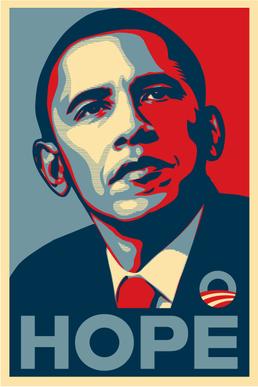
For many people, “hope” is an optimistic feeling — or at least a willingness to go on, because they sense things are going to get better. But is that sense about worn out these days? What if you put “hope” right out there on your poster, like President Obama did, and then everything does not get better like you promised? Instead, there are drones, recession and bailouts. What if your church implies that Jesus is going to get you a job, provide a mate and cure your cancer and those things don’t happen? Won’t the name of your church just point out the fact that it did not happen? For some people, hoping just makes you look naive, at best, and like just another gaslighter, at worst.
We had a few people on our little team whose hopes had been dashed. What’s more, some of them had grown up in the church, where they even memorized Bible verses like in Psalm 116: “I love the Lord, because he has heard the voice of my supplication…I was brought very low and he helped me.” But their lives had not worked out just like the verse seemed to promise, empiricistettes as they were.
After a while, it is hard to figure out what to do with dashed hopes. Sometimes they are like a secret you would not disclose among people who still hope for some bright future.
I have memorized some Bible verses myself and I am an optimistic guy — and God has repeatedly helped me when I was “brought low.” Even so, I have never thought it was wise to make promises God was not going to keep, at least was not wise to act as if God were the Amazon of human want.
Another way of experiencing hope
The Bible does, indeed, promise God will meet our needs. But if you look deeper, it teaches that the promise is deeper than just meeting our expectations. I am re-reading a little book that beautifully points out there is another kind of hope represented in the Bible which is a complete reversal of our usual way of looking at hope in terms of outcomes. We can see that hope in Habakkuk 3:17-19 where the prophet dances on the heights even though the land is devastated, and we can see it when Jesus offers inside water for outwardly thirsty people in John 4:13-14, and we can see it in the “total immersion course” in the school of hope that the book of Job is where he ends up singing Job 19:25-26: “I know my redeemer lives.”
Cynthia Bourgeault calls this deeper hope “mystical hope” — and that is the title of her book, too. Mystical hope has three characteristics in contrast to our usual notions of hope. These usual notions, based on outcomes, are not bad, they just aren’t complete or entirely useful. She says, in light of the three biblical examples I just mentioned:
- Mystical hope is not tied to a good outcome, to the future. It lives a life of its own, seemingly without reference to external circumstances and conditions.
- This kind of hope has something to do with presence – not a future good outcome, but the immediate experience of being met, held in communion, by someone intimately at hand.
- This hope bears fruit within us at the psychological level in the sensations of strength, joy , and satisfaction: and “unbearable lightness of being.” But mysteriously, rather than deriving these gifts from outward expectations being met, it produces them from within.
Our mystical hope
I think we had enough mystical hope when were were planting a church to work for good outcomes even when people thought they were not good enough. We came to know our existence was resistance. Our assessment of our value and impact did not define our worth.
But maintaining that view our ourselves was hard. We were just discovering the seismic shifts among the youth of the nation (our focus demographic) which experts have been talking about ever since. For instance, one week in 2017 our pastors passed around a couple of pieces that tested our hope. One was from the Census Bureau.

The map above shows the increase in the number of young adults (18-34) in the United States living at home with their parents in 2015 compared to 2005. The changes in that decade, and certainly the last preceding 40 years were staggering. More than 1 in 3 young people lived in their parents’ home in 2015. That was a huge increase in one decade. What’s more, of those people, 1 in 4 were idle; that is, they neither went to school or worked. Many people saw that reality as a poor outcome. Were all these people hopeless? Ten years later many of the men in the study are the incels of the manosphere.
The other piece the pastors passed around was about alone and lonely men. A journalist who researched psychology was pondering the horrible Las Vegas shooting. An apparently completely alone man was the shooter. As a “lone wolf” he was not that unusual among men. The author says:
As a man, you might be thinking, “Not me, I’ve got drinking buddies. I play poker with the guys. I’ve got friends.”
But do you have confidants? Do you have male friends who you can actually be vulnerable with? Do you have friends whom you can confide in, be 100% yourself around, that you can hug without saying “No homo,” without feeling tense or uncomfortable while you’re doing it?
For many men, the answer is “no.” So, we spend our time posturing instead.
From an early age, we have an unhealthy ideal of masculinity that we try to live up to. Part of that ideal tells us that Real men do everything on their own. Real men don’t cry. Real men express anger through violence.
The byproduct is isolation. Most men spend the majority of their adult lives without deeper friendships, or any real sense of community. Not to mention a complete inability to release anger or sadness in a healthy way.
Many woman feel exactly the same way, of course. And the evil ways of late capitalism have made a perfect environment to create unhealthy, isolated people — A.I. is just making it worse. I experience the outcomes all the time. Some days it just feels hopeless.
There is something other than bad outcomes
I want to say more about Cynthia Bourgeault’s book in the coming weeks. But for now, let me end with a quote from the early pages of Mystical Hope which talk back to twentysomethings who feel their future is bleak, and call to parents who feel their children are hopeless cases, and whisper to men and women who feel isolated and friendless, stuck in some pattern which feels hopeless. There is something deeper than your situation. Jesus has a promise that is better than you expect.
You’ll need to read her little book to get the full effect and all the references, but maybe you can get a taste from these lines:
- Hope is not intended to be an extraordinary infusion, but an abiding state of being. We lose sight of the invitation – and in fact , our responsibility, as stewards of creation – to develop a conscious and permanent connection to the wellspring. We miss the call to become a vessel, to become a chalice into which this divine energy can pour; a lamp through which it can shine.
- But what if we are intended to become this vessel, this body of hope? What if, in fact, this effervescent, “lightness-of-being” energy is the fuel that drives our human life toward its divine fulfillment? What if our insistence on treating it as a rare and exceptional phenomenon is a way of ducking the invitation that was permanently extended at the Samaritan well that blazing midday?
- The journey to the wellspring, the to secret of Jesus, the Master of Galilee, is the great inner journey to which we Christians are called.
I am glad we put hope right out there in the name of our expression of the Church back in the day. It dared people not to meet Jesus. On the one hand, God produced outcomes that were MUCH greater than we imagined as we sat in a little circle of ten in our living room. We hoped good things would happen and even more than we hoped happened. So that’s great. But what about all that did not happen? What about when it all fell apart 20+ years later? What sustained us when we failed, broke up, died, lost faith, were betrayed and confused?
It is always that mystical hope, that turning toward the living water which energizes us to get up and live in joy as we follow Jesus through what is next.
[As you can tell, this is the first in a set of updates of 2017 posts. They seem even more important now than when I first wrote them.]
*******************
Today is Pantaleon Day! The martyr who gave away his wealth and doctored the poor for free. He used to be wildly famous, as a result. Meet him at The Transhistorical Body.


 The men’s retreat was full of wonderful stories about growth and pain and Jesus. I told parts of my story of transformation, as well. I said that my story had a wonderful factor in it. I may see my parents as having “whacked” the best parts of me whenever they surfaced like they were playing whack-a-mole. But in my hole I found Jesus. When I was a teen, and all my narcissistic props got knocked out from under me, I remembered Jesus in the deep hole of my depression.


